
Best Of
The best exterior paint for Illinois freeze and thaw cycles
Reviewed by David Cook · Last updated August 19, 2026 · 7 min read
For most Huntley area homes we use a high quality 100 percent acrylic exterior paint rather than a full elastomeric coating, because acrylic flexes enough to handle our freeze and thaw swings on standard siding and trim, while elastomeric is a specialty product better suited to masonry and stucco.
The short version
- 100 percent acrylic is our default for siding and trim here.
- Elastomeric has its place, mainly on masonry and stucco, not typical siding.
- Film flexibility matters more than film thickness in freeze thaw climates.
- Prep and caulk decide the outcome as much as the paint does.
- Temperature and dew point at application time affect how the paint cures.
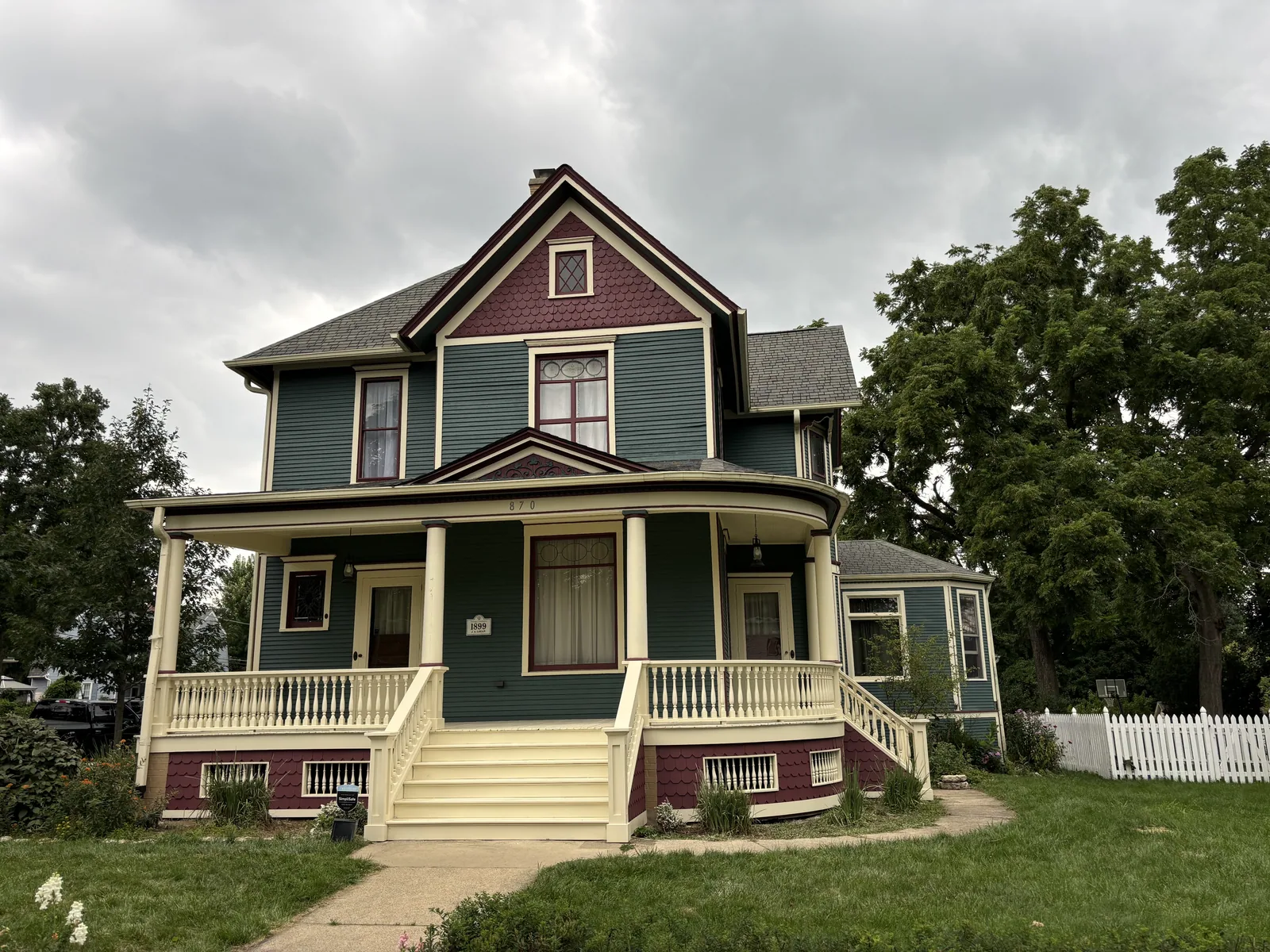
Elastomeric versus 100 percent acrylic
Elastomeric coatings are thick, rubbery, and built to bridge hairline cracks in masonry and stucco. They can be a good fit on a block foundation wall or a stucco exterior where movement and cracking are the main concern.
On typical wood, fiber cement, or vinyl siding, though, elastomeric is usually more than the substrate needs and it can trap moisture behind it if it is not applied and vented correctly. A high quality 100 percent acrylic exterior paint gives you strong adhesion and enough flexibility for our climate without that risk, which is why it is our default on most Huntley area homes.
Why film flexibility matters more than film thickness
Illinois siding goes through real temperature swings, sometimes forty or fifty degrees in a single day during spring and fall, and the material underneath expands and contracts with every swing. A paint film that cannot flex with that movement will crack at the surface eventually, no matter how thick it is.
100 percent acrylic resins are built to stay flexible across a wide temperature range, which is exactly what freeze and thaw cycles demand. A thicker but stiffer coating can actually crack sooner than a thinner flexible one, because it has less give.
Why prep and caulk decide the outcome
No exterior paint, acrylic or elastomeric, will hold up if the surface underneath it is not properly prepped. That means scraping loose and failing paint back to a sound edge, sanding rough spots, and priming any bare wood or repaired sections before topcoat goes on.
Caulk matters just as much. Every joint where two materials meet, trim to siding, window to trim, corner boards, is a place where water can get behind the paint film if the caulk has failed. We recaulk those joints as part of prep, because a good paint job over bad caulk fails at the seams first.
Why we watch temperature and dew point, not just the calendar
Paint manufacturers publish minimum application temperatures, but the more overlooked number is dew point. If the surface temperature is too close to the dew point, moisture can condense on the siding as it cools in the evening, right into a film that has not fully cured yet.
We check both air temperature and dew point before we paint, not just whether it is a nice day. That is part of why exterior schedules sometimes shift a day or two, we would rather wait than paint a wall that will not cure properly overnight.
Why south and west exposures fade faster
South and west facing walls take the most direct sun in a day, and UV exposure breaks down pigment and binder faster than on north or east walls. Over years, you will often see a visible difference in sheen and color retention between a home's sunny side and its shaded side.
This is not a reason to use a different paint on different sides of the house, but it is a reason we mention it to clients: expect the south and west elevations to show wear first, and that is normal, not a sign the paint failed.
How do you test whether an old exterior wall is ready to repaint
Before we quote a color or a coating, we run a tape test on a few spots, pressing painter's tape onto the siding and pulling it off to see how much old paint comes with it. If a lot of paint pulls away, the surface needs more scraping and priming than a simple recoat, no matter which paint goes on top.
We also check for chalking, a powdery residue that rubs off on your hand when you wipe the siding. Chalky old paint needs a wash and often a bonding primer before new paint will adhere, otherwise the new coat sits on top of a failing layer and fails with it.
What do we recommend when a homeowner is on the fence about elastomeric
If someone specifically asks for elastomeric on wood or fiber cement siding because they read it lasts longer, we walk them through the moisture trapping risk before agreeing to it. On masonry foundation walls or a stucco exterior, elastomeric is genuinely the better call and we will say so even though it is not our default product. We would rather point a homeowner toward the right product for their substrate than sell them the wrong one because it sounds more premium.
For everything else, standard siding, trim, fascia, and soffits, a quality 100 percent acrylic with proper prep and caulking is what holds up best through our freeze and thaw cycles, and it is what we recommend without hesitation.
Your next step
Price your project yourself in about a minute. No form, no sales visit needed to see a number.
Read next
Problems
When You Should Not Paint Your House Right Now
Sometimes the right answer is to wait. Here is when we tell Huntley area homeowners to hold off on painting.
6 min read
Problems
Why Paint Bubbles, Peels and Fails
Bubbling and peeling paint is a symptom, not the problem. Here is what usually causes it around Huntley homes.
6 min read
Reviews
Sherwin Williams vs Benjamin Moore for Illinois interiors
A field comparison of Sherwin Williams and Benjamin Moore paint lines for Illinois homes, from a crew that uses both every week.
6 min read
Ask us anything
Still have a question?
Send it over and we will answer it. We answer questions publicly on this site, because if you are wondering it, someone else is wondering the same thing and nobody has told them straight.